The Italian Republic: the Constitution comes into force
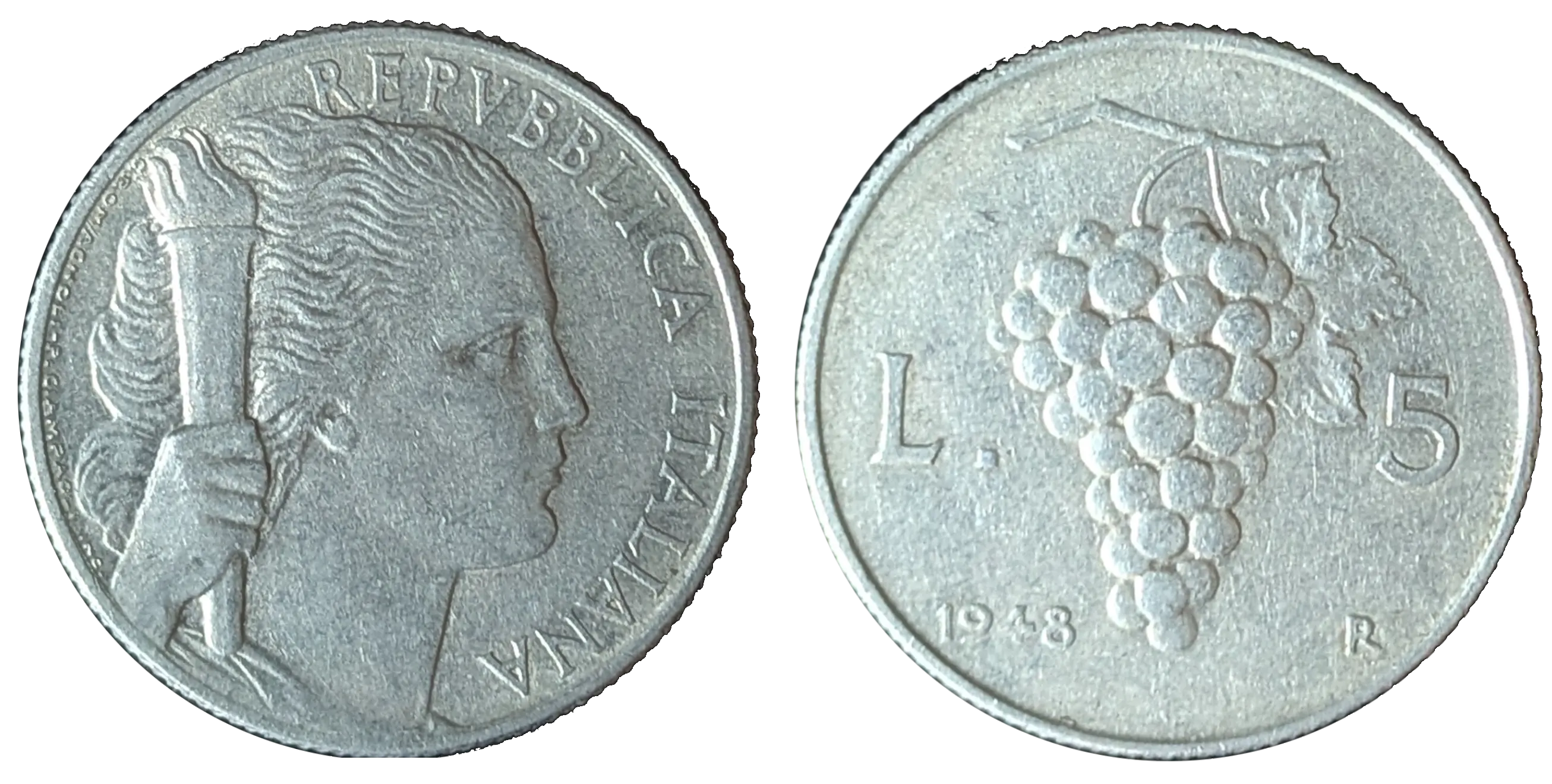
5 lire Italian Republic
1948 AD · Rome
date shown 1948 · mint mark R
D/ REPVBBLICA ITALIANAFemale head facing right with a torch; the artist's signature along the rim.
R/ L. 5 / 1948 / RBunch of grapes beside the denomination; year and mint mark below.
At the end of the Second World War, Italy emerged deeply scarred by twenty years of Fascist dictatorship, the conflict, and occupation. On 2 June 1946, Italians were called upon to choose between monarchy and republic in a referendum and to elect the members of the Constituent Assembly. For the first time, women also voted in a nationwide political election. The Republic’s victory brought the reign of the House of Savoy to an end and opened a new chapter in the country’s history.
The task of shaping the new state fell to the Constituent Assembly, which brought together different political traditions united by their experience of the struggle against Fascism and their determination to build a democratic system. After lengthy debate, the Constitution was approved on 22 December 1947, promulgated five days later, and came into force on 1 January 1948. Its principles established popular sovereignty, labour, fundamental rights, and the balance of powers as the foundations of the new Republic.
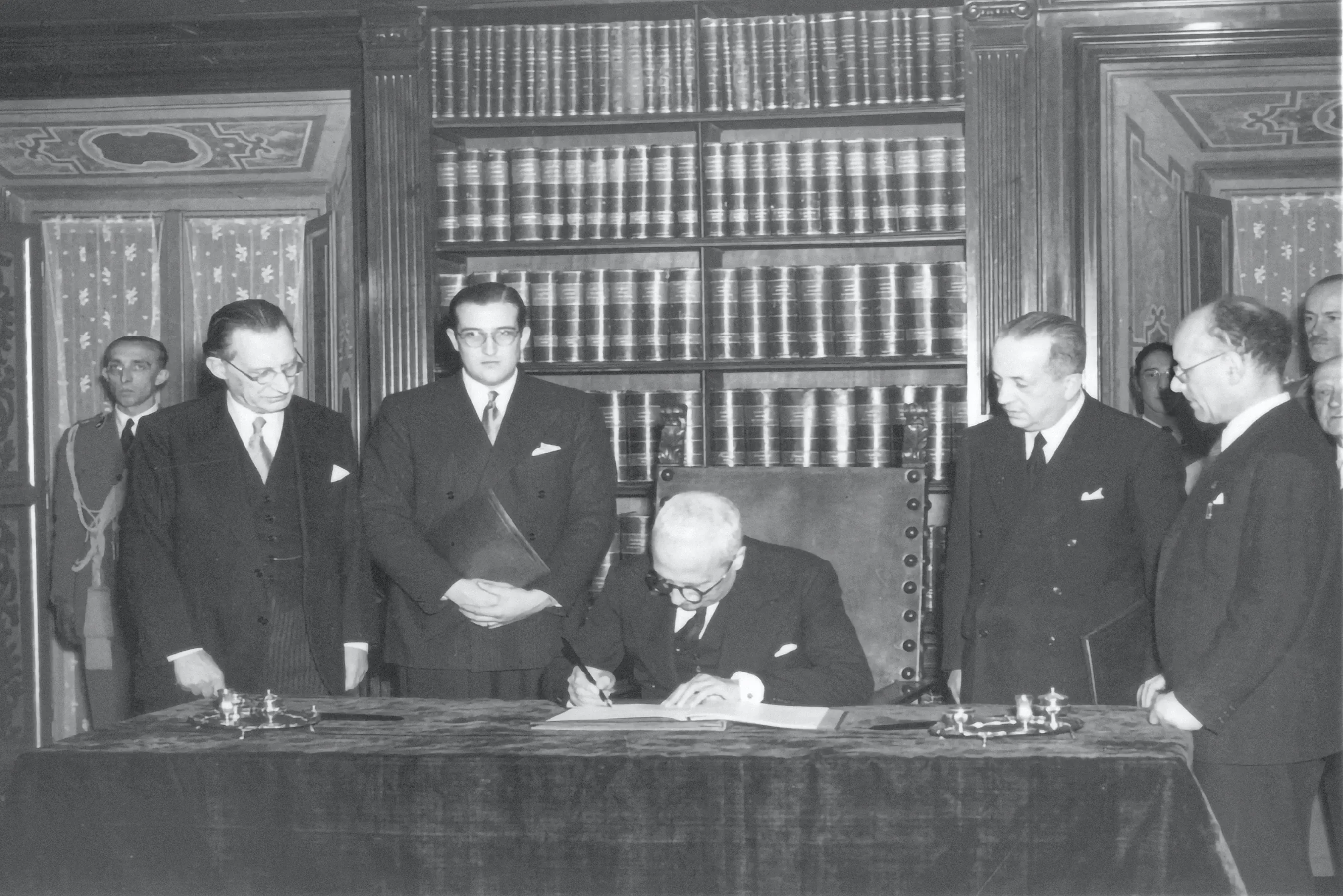
Enrico De Nicola signs the Italian Constitution. Source: Chamber of Deputies, public domain.
Coinage also helped make this change visible. The 5-lire coins minted in 1948 belong to the first coin series of the Italian Republic, introduced in 1946 as the country faced reconstruction and a severe economic crisis. Made of Italma, a lightweight aluminium-based alloy, the coin reflected the need to produce money suitable for everyday circulation using inexpensive materials.
The obverse depicts a female profile accompanied by a torch, an image associated with liberty and rebirth, surrounded by the legend “REPVBBLICA ITALIANA”. On the reverse, a bunch of grapes appears beside the denomination of 5 lire, evoking agricultural labour and the resources of the land, which were central to Italy’s post-war economy. On an ordinary object designed to pass from hand to hand, these symbols spread the identity of the new state and the hope of prosperity on which democratic reconstruction was founded.
Explore the complete lira series of the Italian Republic in the secondary collections.