Roman Republic
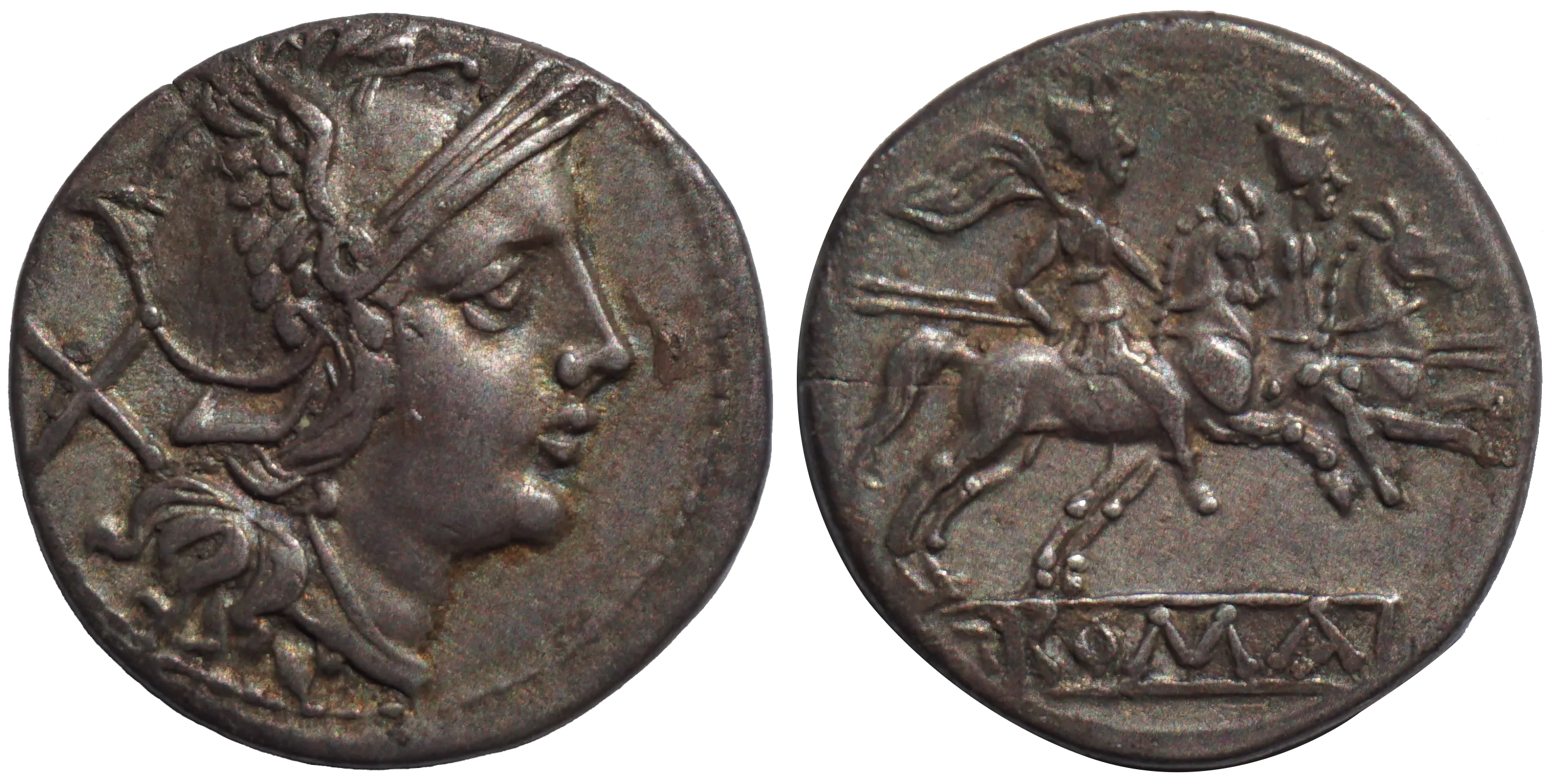
Denarius Roman Republic
213 BC · Catania?, Sicily · Silver
3.8 g · 20 mm
D/ XHelmeted head of the goddess Roma facing right; mark of value X behind the head.
R/ ROMAThe Dioscuri on horseback riding right, with lances couched; legend ROMA in the exergue.
Ref. RRSC B25.2 (plate coin); Cr. 68/1b
The Second Punic War is regarded by historians as the most important armed conflict of antiquity because of its impact on the history, politics, and society of the entire Mediterranean world. Driven by Carthage’s desire to recover the military power and political influence it had lost after its defeat in the First Punic War, the conflict was marked by the military genius of Hannibal Barca, who came to threaten Rome itself.
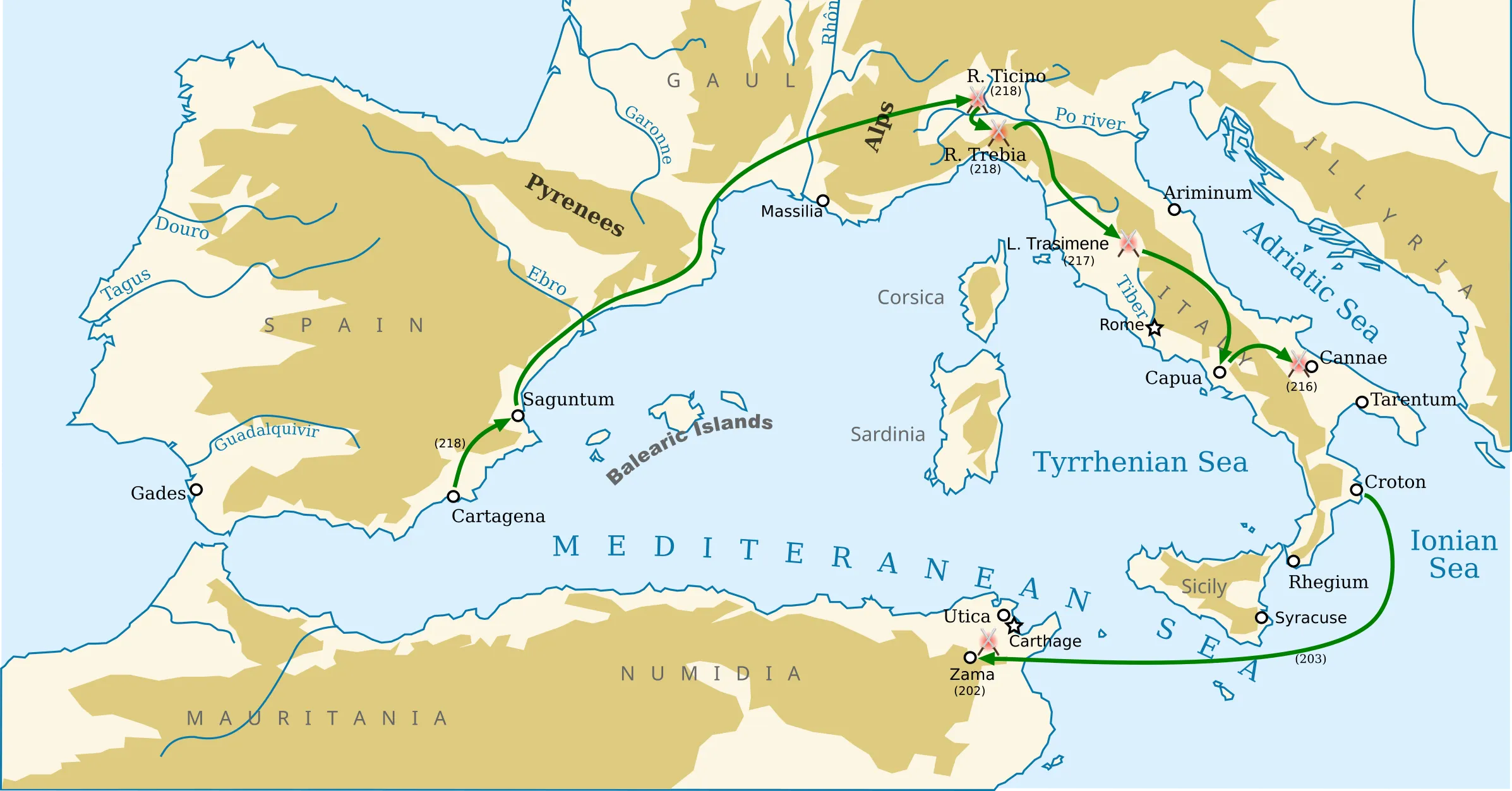
The route taken by Hannibal’s army from Carthage to Italy during the Second Punic War.
The war placed unprecedented demands on the Republic. After the disastrous defeat at Cannae in 216 BC, Rome had to maintain armies on several fronts, secure the loyalty of its allies, and finance campaigns ever farther from the Italian peninsula. This emergency prompted a profound reorganization of the monetary system, which until then had been based primarily on bronze. Silver, already widely used in Mediterranean trade, became the most suitable means of meeting the new military and commercial needs of an expanding power.
It was during these years that the denarius appeared, destined to remain Rome’s principal silver coin for centuries. Its name derived from its original value of ten asses, indicated on the obverse by the mark “X”. With an initial weight of just over four grams, the denarius provided a relatively stable and readily recognizable measure of value that could circulate far beyond the Republic’s borders. Its introduction was therefore not merely a response to the demands of war, but marked the beginning of a monetary system better suited to Rome’s growing economic and political influence.
The specimen presented here belongs to the earliest type of Republican denarius. The obverse depicts the helmeted head of the goddess Roma, personification of the city and its military strength, accompanied by the mark of value “X”. The reverse shows the Dioscuri, Castor and Pollux, galloping with lances couched; according to tradition, the divine twins had aided the Romans at the Battle of Lake Regillus and then appeared in the Forum to announce the victory. Beneath the horses, the legend “ROMA” clearly identifies the authority responsible for the issue.
The chosen imagery thus combined economic value with propaganda. Armed Roma on the obverse and the victorious Dioscuri on the reverse conveyed divine protection, military discipline, and confidence in the Republic’s survival at the very moment Hannibal was fighting in Italy. Born during one of the gravest crises in Roman history, the denarius outlasted the war and accompanied Rome’s expansion across the Mediterranean, becoming one of the most enduring symbols of its power.