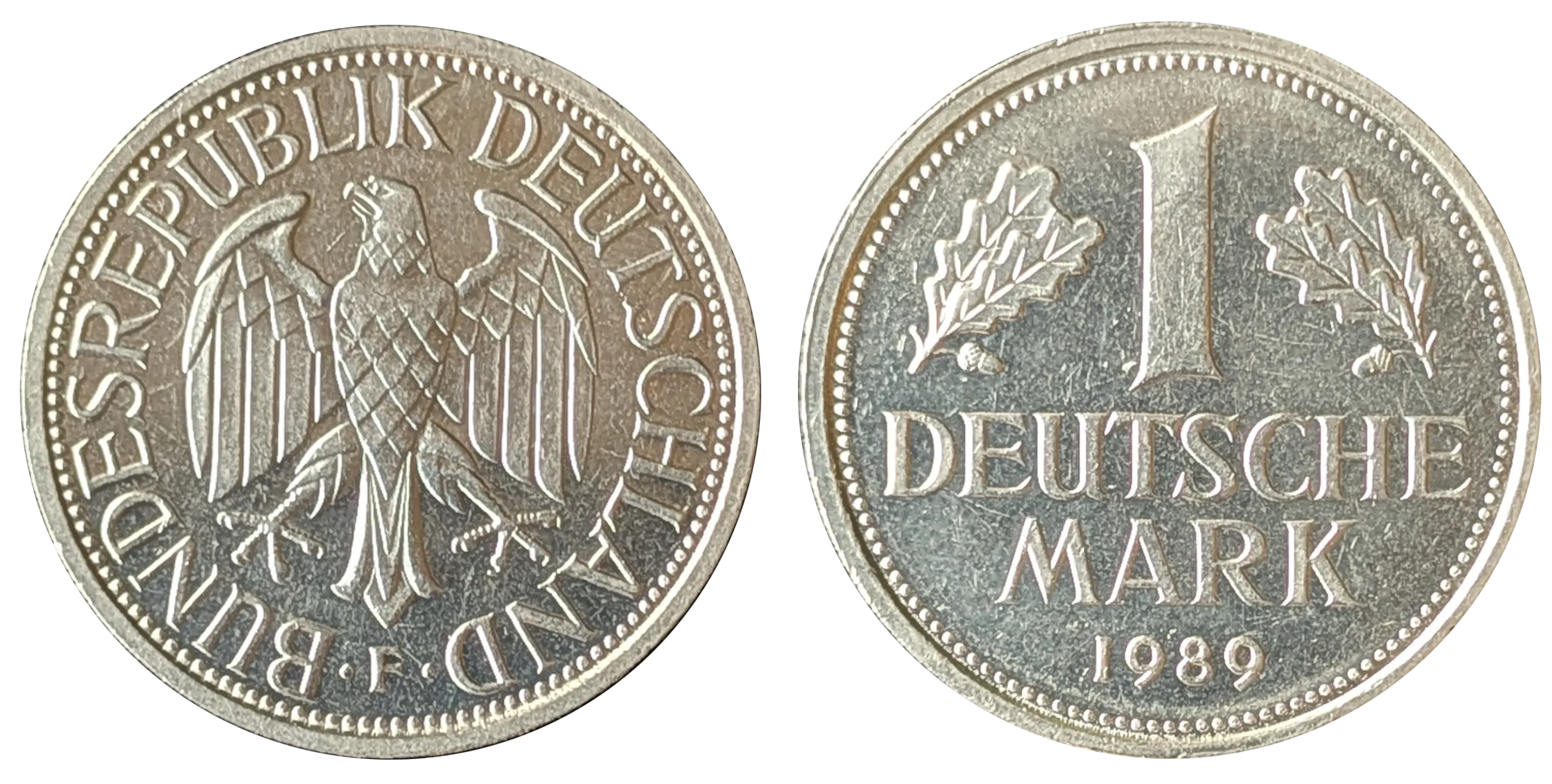
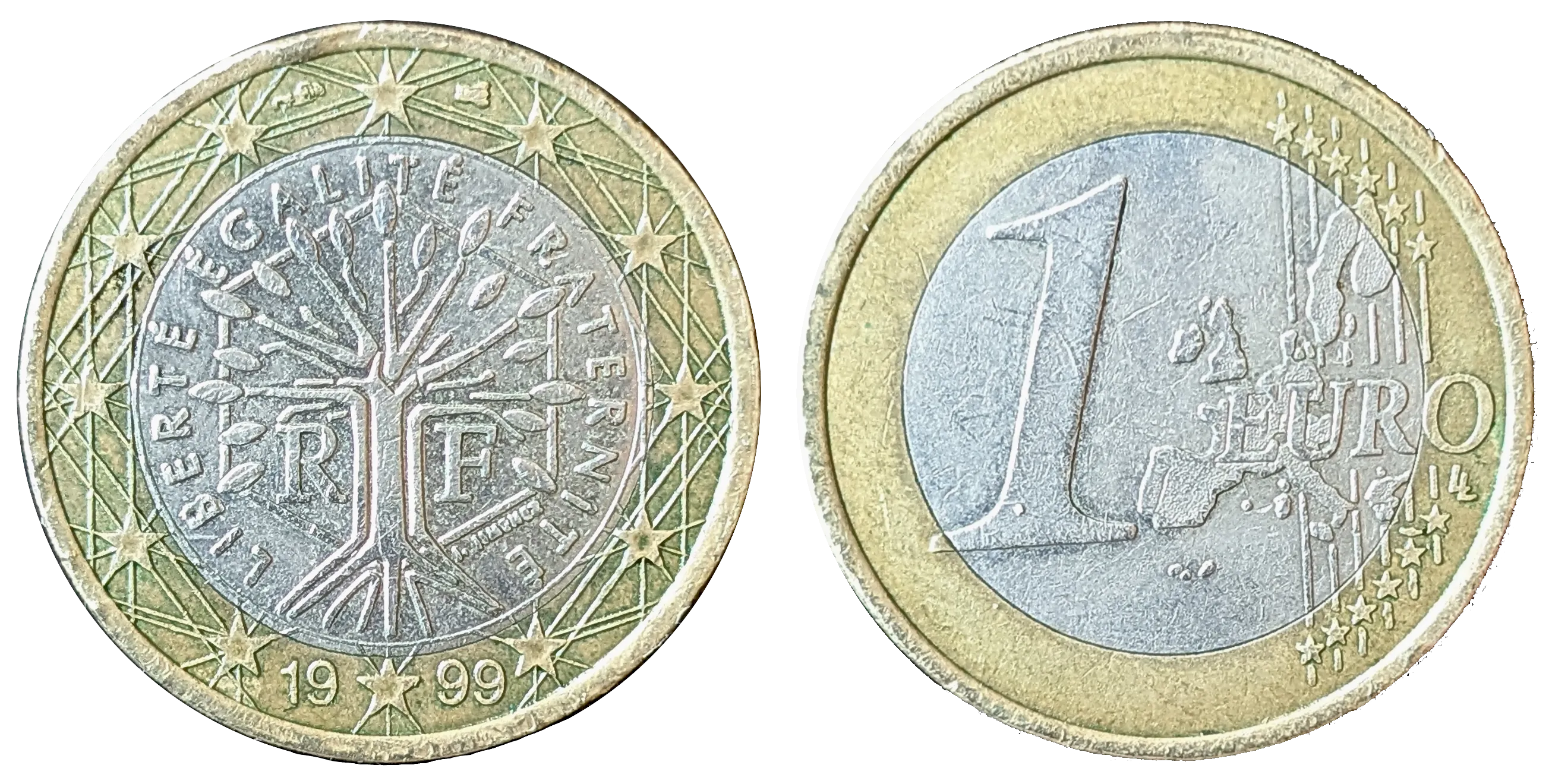
1991 AD
The Yugoslav Wars
- Denomination
- 1 kuna
- Authority
- Republic of Croatia
- Issuer
- National Bank of Croatia
- Date
- 1993 AD
- Mint
- Zagreb
- Date on coin
- 1993
- Material
- Copper-nickel-zinc (65% Cu, 23.2% Ni, 11.8% Zn)
- Weight
- 5 g
- Diameter
- 22.5 mm
- Die axis
- 0 h
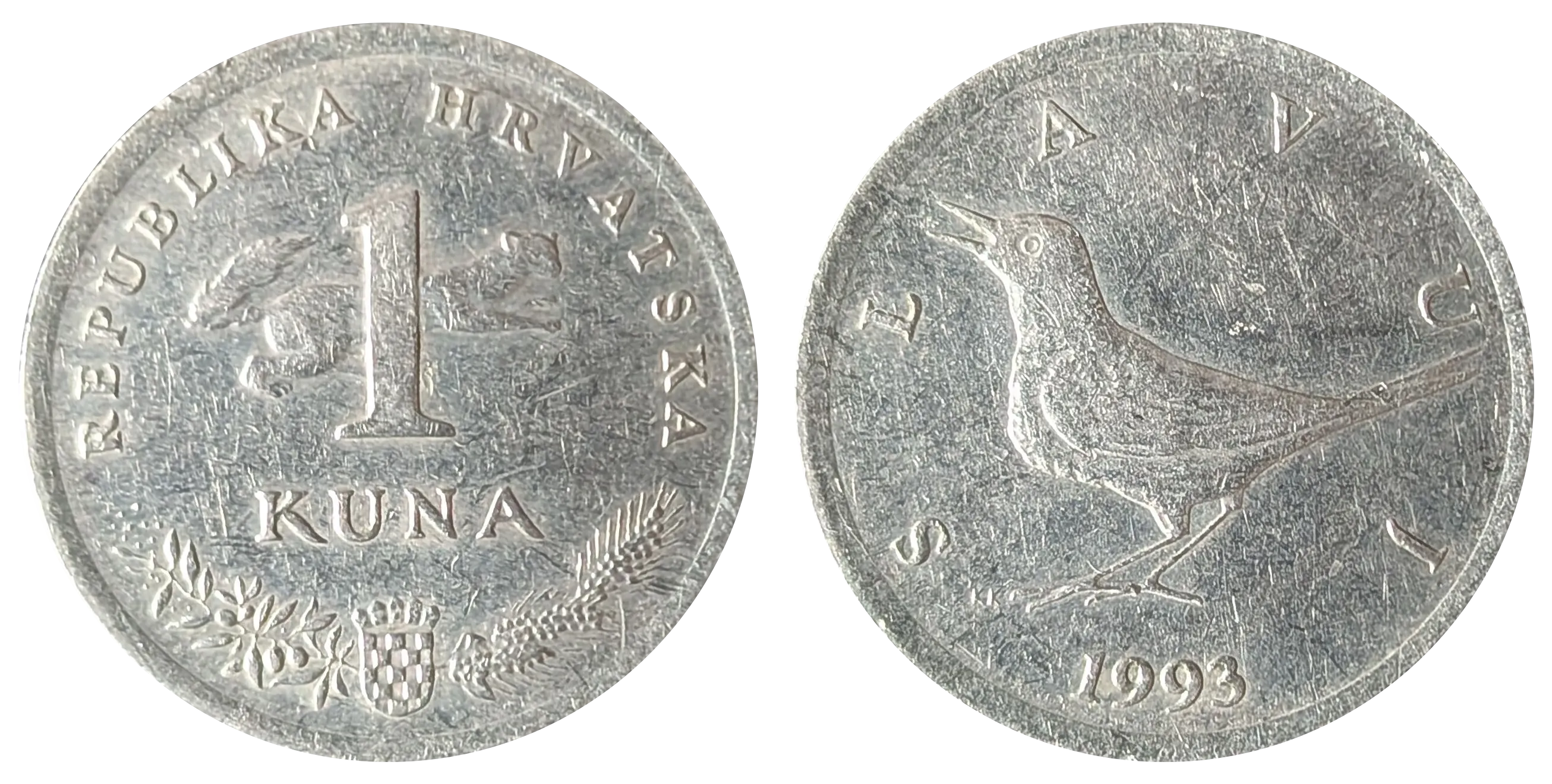
D/ Obverse
REPUBLIKA HRVATSKA / 1 KUNA
Numeral 1 over a marten running right; Croatian coat of arms between an olive branch and an ear of wheat.
R/ Reverse
SLAVUJ / 1993
Nightingale standing left on a twig.
This 1-kuna coin is dated 1993, the year on the first coins of the kuna, independent Croatia’s currency. The kuna itself was launched on 30 May 1994, while Croatia was still at war. Rebel Serb forces then held more than a quarter of the country.
The obverse reads “REPUBLIKA HRVATSKA” (“Republic of Croatia”). Behind the large numeral 1 runs a marten, a small forest animal of the weasel family. The animal gives the currency its name: in Croatian, kuna means marten. At the bottom, the checkered shield of the Croatian coat of arms sits between an olive branch and an ear of wheat.
The reverse shows a nightingale, with its Croatian name, “SLAVUJ”, around the edge and the date below. Coins dated in even years, from 1994, give the bird’s Latin name, Luscinia megarhynchos, instead. The sculptor Kuzma Kovačić designed the whole series. The 1, 2 and 5 kuna coins all pair the running marten with an animal that lives in Croatia. A kuna was divided into 100 lipa, whose coins show plants: lipa means linden tree.
The name looks back to the Middle Ages, when marten pelts served as a means of payment. Medieval records from Slavonia and Hungary mention the “marturina”, a tax named after marten skins, first paid in pelts and later in coin. From the 13th century, the bans of Slavonia, the region’s governors, struck a silver coin with a running marten, the banovac.
The name was also disputed. From 1941 to 1945, the Independent State of Croatia had called its currency the kuna. That state was the Ustaše regime, set up under the protection of Nazi Germany and Fascist Italy. Supporters of the name replied that it was older, and that Croatia’s anti-fascist council had also used it during the Second World War.
Yugoslavia was a federation of six republics. On 25 June 1991, Slovenia and Croatia declared independence. In Croatia, Serb rebels backed by the Yugoslav army took control of large areas. The town of Vukovar fell in November 1991, after a siege of almost three months. In 1992 the war spread to Bosnia and Herzegovina, where Sarajevo was besieged for almost four years. In July 1995, Bosnian Serb forces killed more than 8,000 Bosniak (Bosnian Muslim) men and boys at Srebrenica.
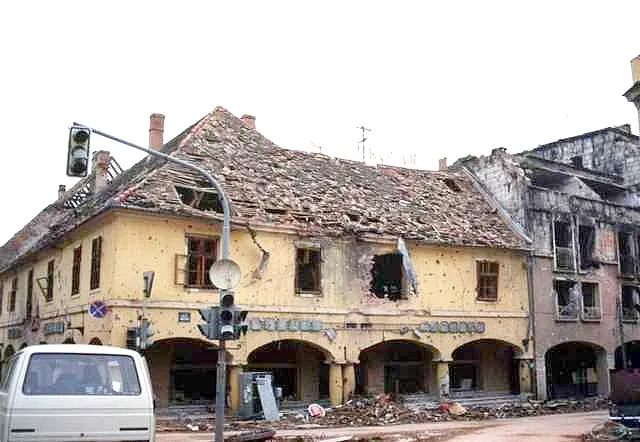
War-damaged buildings in Vukovar on 29 November 1991, eleven days after the town fell. Photo: Peter Denton, CC BY-SA 2.0.
In August 1995, the Croatian army retook most of the rebel-held land, and much of the Serb population there fled. The Dayton Agreement, signed that December, ended the war in Bosnia.
Croatia had also left the Yugoslav currency. On 23 December 1991, it replaced the Yugoslav dinar with a provisional Croatian dinar, which lost value quickly during the war. In May 1994 the kuna took its place, at a rate of 1,000 dinars to one kuna. The kuna remained Croatia’s currency until 1 January 2023, when the country adopted the euro at 7.53450 kuna to the euro. The marten stayed: it appears on the national side of Croatia’s 1-euro coin.
Sources
- Croatian National Bank: Coins
- Croatian National Bank: 1 kuna
- Narodne novine 37/1994: decision on the kuna coins (in Croatian)
- Narodne novine 47/1995: coins with Latin names (in Croatian)
- Croatian National Bank: The Kuna – Twenty Five Years
- Croatian National Bank: Thirty Years of Challenge
- Croatian Encyclopedia: marturina (in Croatian)
- Croatian Encyclopedia: banovac (in Croatian)
- Jareb, The kuna as a symbol of monetary value (2022, in Croatian)
- Granic, From Fur Money to Modern Currency: The Kuna (2008)
- Wikipedia: Croatian kuna
- Government of Slovenia: Statehood Day
- ICTY: Mrkšić et al. trial judgement (Vukovar)
- Human Rights Watch: World Report 1995, Croatia
- Wikipedia: Croatian War of Independence
- Al Jazeera: Bosnia's war, 30 years on
- European Central Bank: Croatia's euro coins
- European Central Bank: Croatia's changeover to the euro