The fall of the Berlin Wall
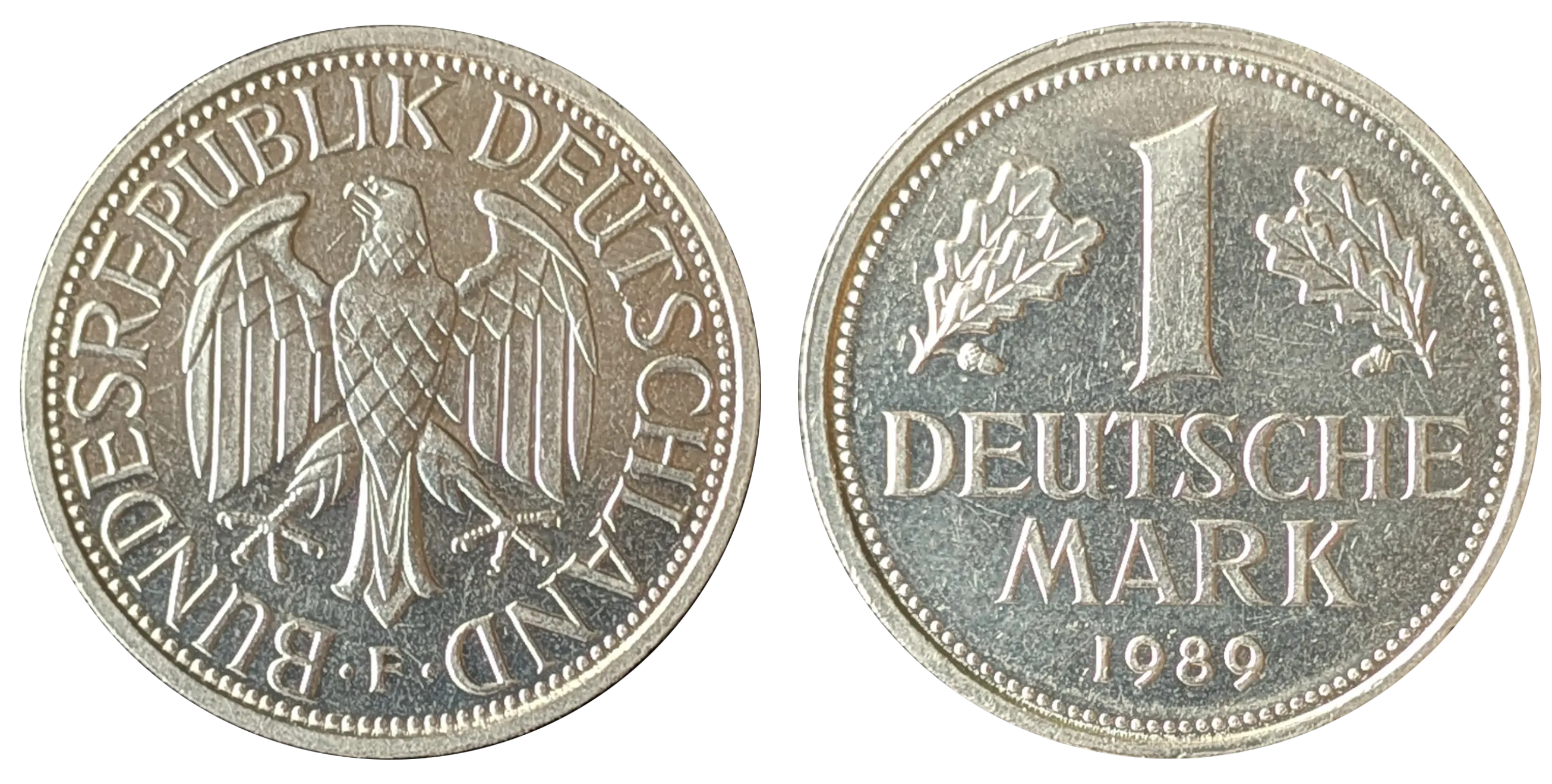
1 German mark Federal Republic of Germany
1989 AD · Stuttgart
date shown 1989 · mint mark F
D/ BUNDESREPUBLIK DEUTSCHLAND / FFederal eagle; mint mark F below the tail.
R/ 1 DEUTSCHE MARK / 1989Denomination between two oak branches; year of minting below.
At the end of the Second World War, Germany and Berlin were divided into occupation zones. In 1949, two opposing states were established: the Federal Republic of Germany in the west and the German Democratic Republic in the east. To stem the exodus of its citizens to West Berlin, the East German government began erecting a system of walls, fences, and checkpoints on 13 August 1961. The Berlin Wall thus became the most visible symbol of the Cold War and of Europe’s political, economic, and social division.
In 1989, the balance began to give way. Reforms launched in the Soviet Union, the opening of the Hungarian border with Austria, and growing peaceful demonstrations in East Germany weakened the regime. On the evening of 9 November, during a press conference, official Günter Schabowski gave a confused announcement of new travel regulations, implying that they were effective immediately. Thousands of people converged on Berlin’s border crossings, and the guards, lacking clear orders, eventually opened them. Images of the crowds on the Wall marked the division’s effective end, although German reunification would not be completed until 3 October 1990.
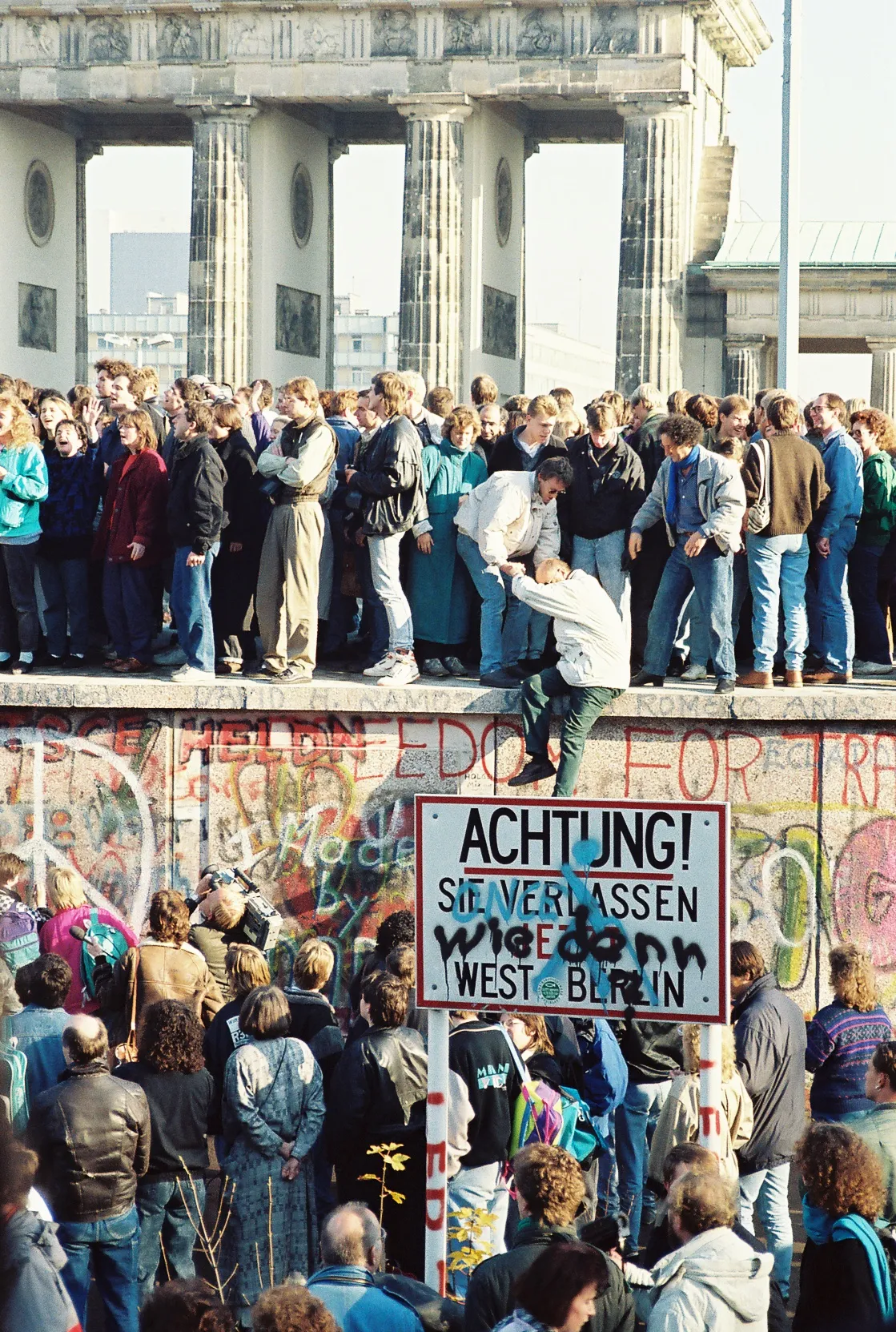
Crowds on the Wall near the Brandenburg Gate. Photo: Sue Ream, CC BY 3.0.
The German mark also tells the story of the gulf that had developed between the two German states. Introduced in 1948 in the western zones and later adopted by the Federal Republic, it had become one of the symbols of economic stability and post-war reconstruction. In the east, a different currency circulated: the mark of the German Democratic Republic. After the fall of the Wall, the monetary union of 1 July 1990 extended the western mark to East Germany, anticipating political unification by several months.
The specimen presented here, minted in Stuttgart in 1989, thus dates from the final year of a still-divided Germany. The obverse features the federal eagle, emblem of the Federal Republic of Germany, while on the reverse the denomination is framed by two oak branches, a motif traditionally associated with German history and identity. Created as the currency of one of the two states, the Deutsche Mark would soon become the currency of reunified Germany: an ordinary everyday object that passed through one of the decisive turning points in contemporary European history.