European Union
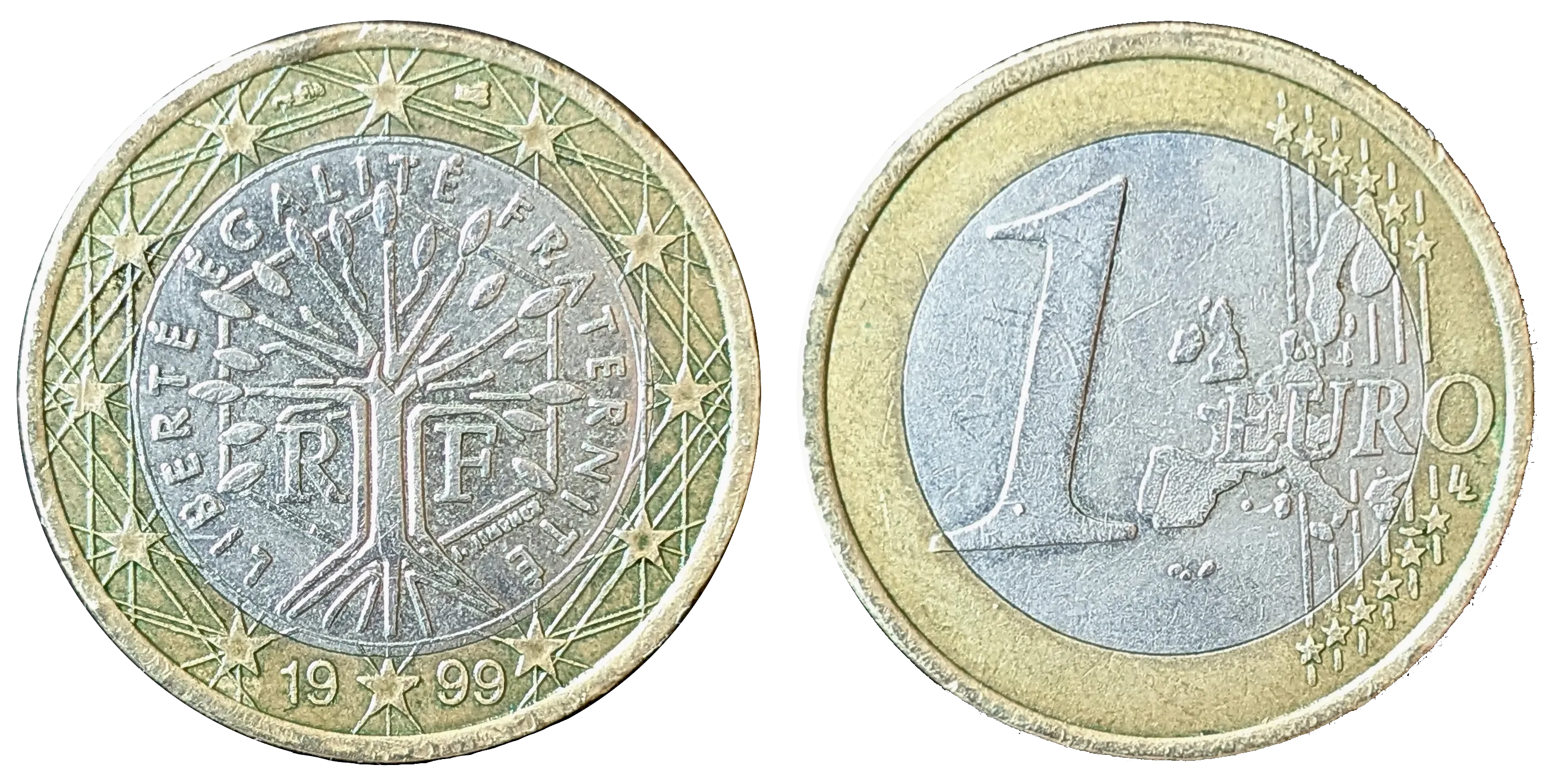
1 euro French Republic
1999 AD
date shown 1999
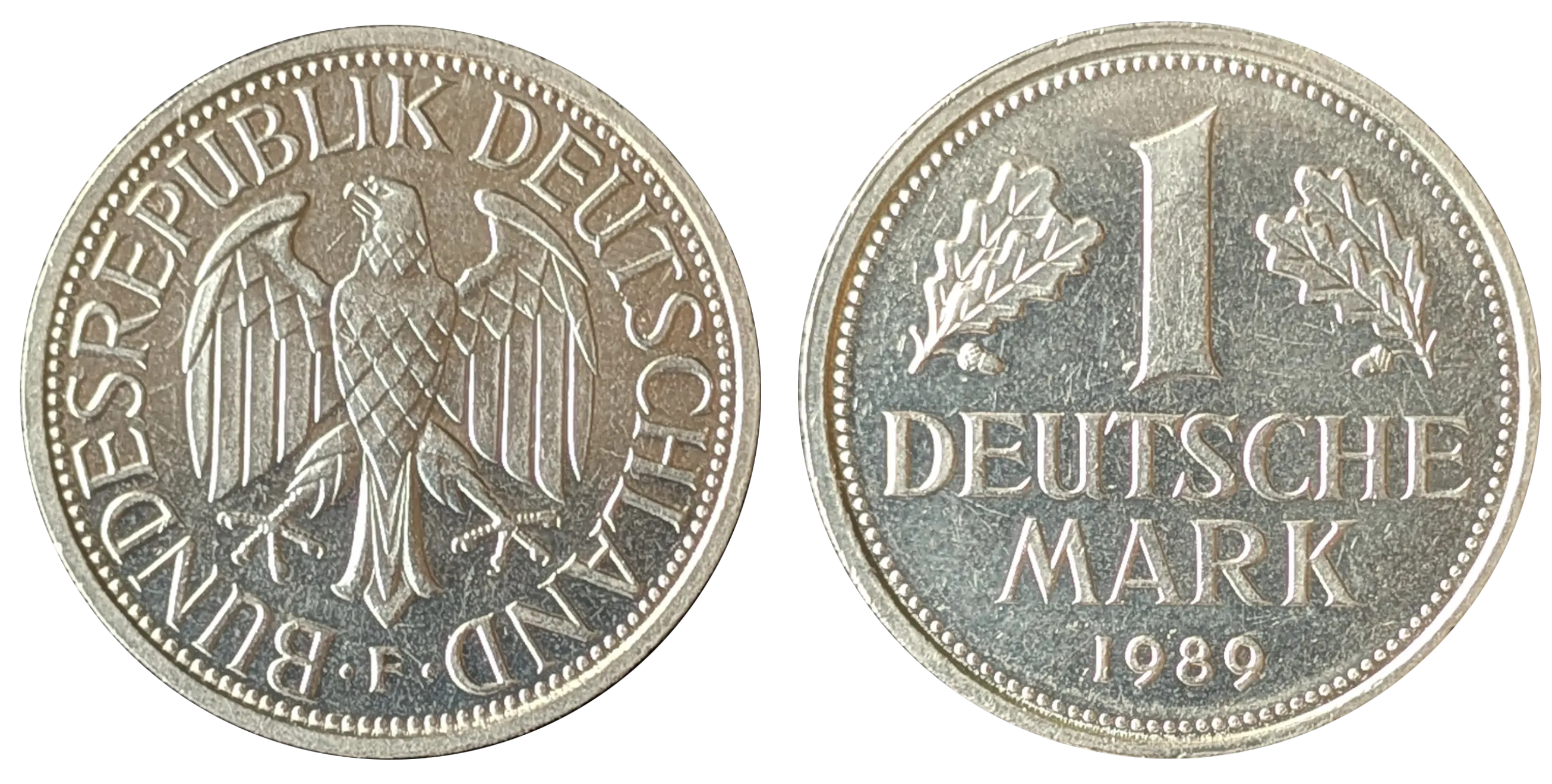
D/ LIBERTÉ ÉGALITÉ FRATERNITÉ / RF / 1999Stylised tree within a hexagon, surrounded by the republican motto and the twelve European stars.
R/ 1 EURODenomination and map of Europe crossed by lines linking the twelve stars.
In the aftermath of the Second World War, several European countries embarked on a process of cooperation aimed at securing peace and fostering economic reconstruction. The European Coal and Steel Community, established in 1951, was followed by the European Economic Community in 1957. Over the following decades, integration gradually expanded to trade, freedom of movement, and common institutions, transforming former adversaries into members of a shared political project.
A decisive milestone was the Maastricht Treaty, signed in 1992 and brought into force the following year. The treaty formally established the European Union and laid the foundations for a single currency intended to strengthen the common market and bring the economies of participating states closer together. On 1 January 1999, the euro became the official currency of eleven countries: initially, it was used only in financial markets, electronic payments, and accounting, while national currencies continued to circulate at exchange rates that had become irrevocably fixed.
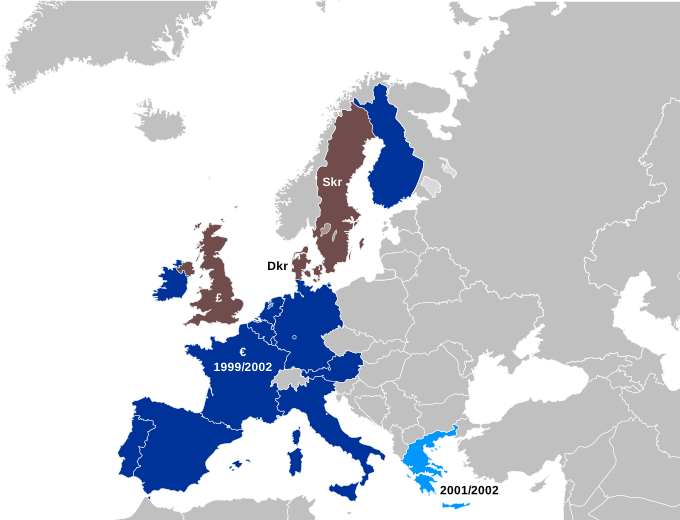
The countries that adopted the euro in 1999. Map: Kolja21, CC BY 3.0.
Euro banknotes and coins entered citizens’ pockets on 1 January 2002, completing one of the largest currency changeovers ever undertaken. Each coin was designed with a common side, identical for all states, and a national side chosen by the issuing country. This structure made visible the principle underlying the monetary union: sharing a single currency without erasing Europe’s different historical and political identities.
The specimen presented here is a French 1-euro coin dated 1999, part of the first issues produced in preparation for the transition to the new cash currency. The national side features a stylised tree enclosed in a hexagon recalling the shape of France and surrounded by the motto «Liberté, Égalité, Fraternité»: its roots and branches evoke continuity, growth, and cohesion. On the common side, the denomination and the map of Europe are united by the twelve stars, a symbol of unity and solidarity. The coin thus brings together French republican identity and membership in a broader European community.