Roman Empire: Diocletian
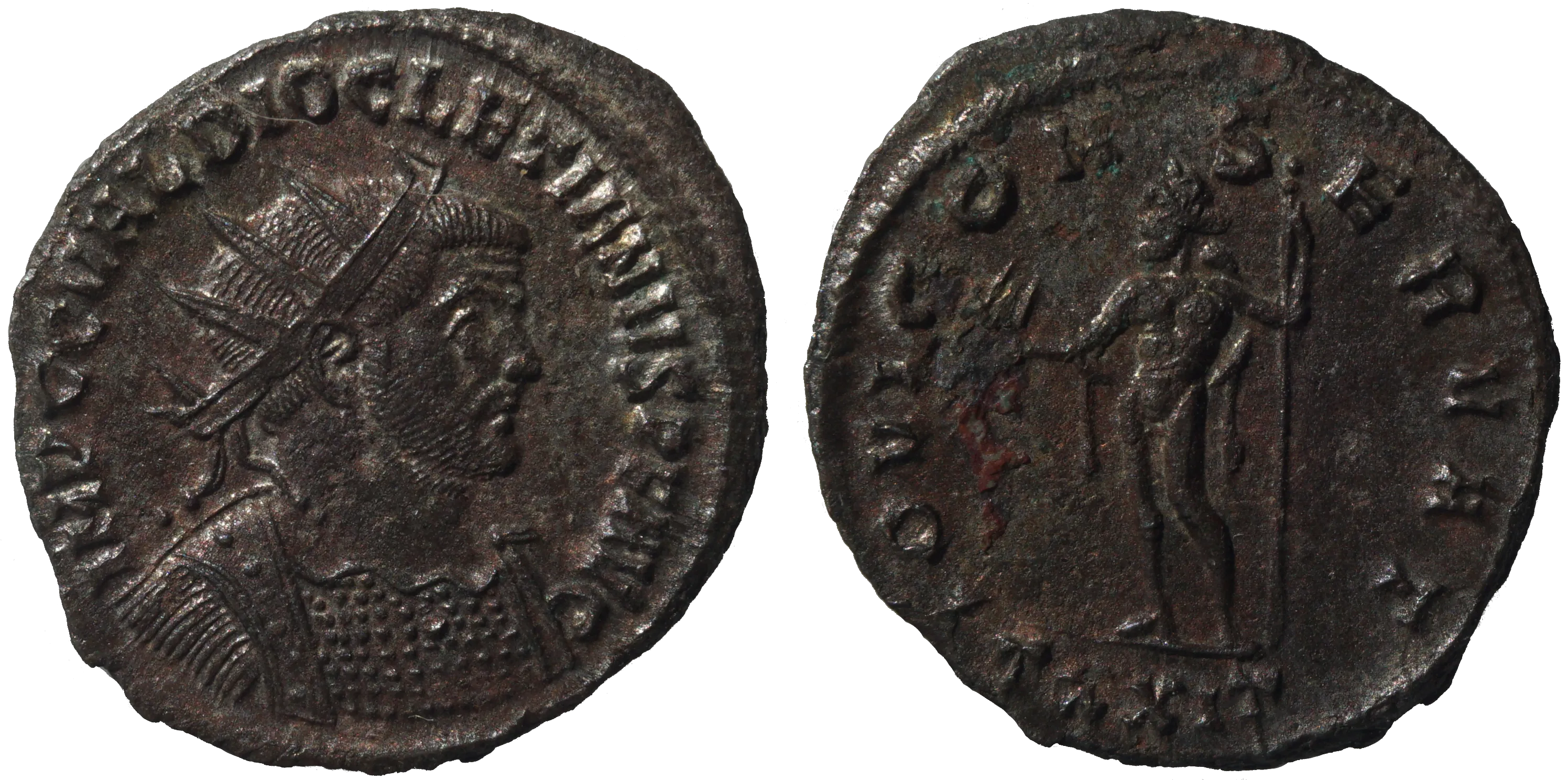
Antoninianus Roman Empire
Issuer: Diocletian
285 AD · Ticinum
mint mark XXI T
D/ IMP C C VAL DIOCLETIANVS P F AVGRadiate, draped, and cuirassed bust of Diocletian facing right.
R/ IOVI CONSERVAT AVGG / XXI TJupiter standing left, holding Victory and a sceptre; eagle at his feet.
Ref. RIC V 222
At the end of the 3rd century AD, the Roman Empire stood on the brink of collapse. Decades of civil war had fragmented imperial authority, while rival generals vied for the throne in rapid succession. External pressures mounted along the frontiers, and within the Empire the economy faltered. Inflation eroded the currency’s value, and the coinage itself, once represented by the denarius, for centuries a trusted symbol of Rome’s power, had been progressively debased, with an ever-diminishing silver content that ultimately undermined public confidence.
It was amid this instability that Diocletian came to power in 284 AD. A career officer of humble origins, he brought with him not only military strength but also a vision of renewal. Recognizing that the Empire had become too vast to be ruled by one man, he reorganized its structure, distributing power among several rulers in what would later be known as the Tetrarchic system. His reforms touched every aspect of imperial life, including the economy, where he sought, with considerable difficulty, to restore stability and confidence in the currency.
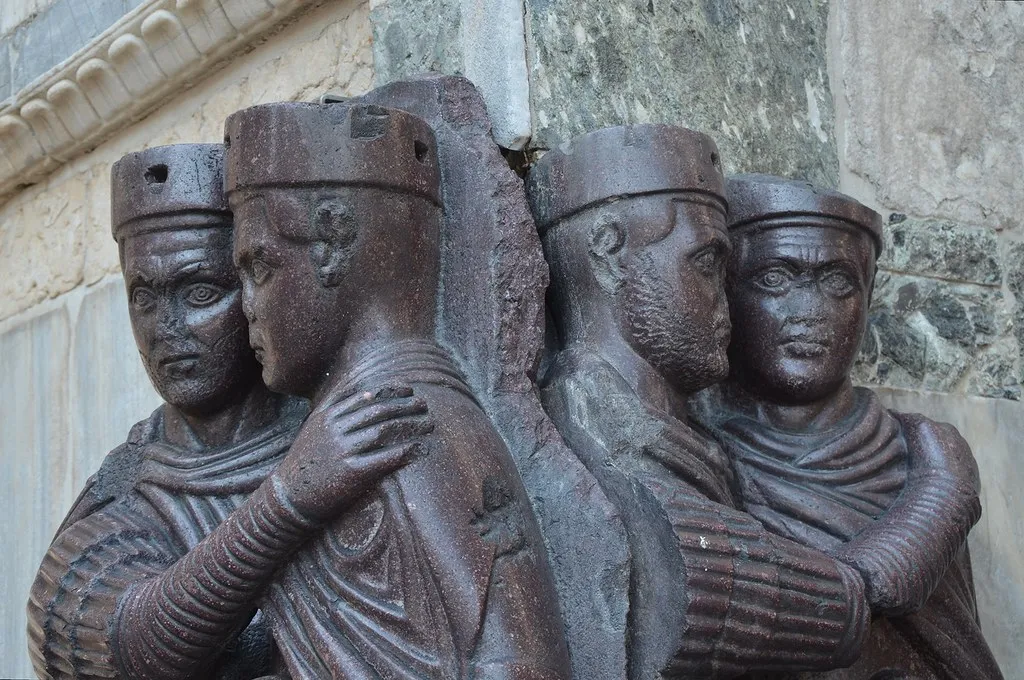
The Tetrarchs, a 4th-century porphyry sculpture now at St Mark’s Basilica in Venice.
During this period of transformation, coins such as the one presented here were struck at the mint of Ticinum, modern-day Pavia. This is an antoninianus, a denomination worth 2 denarii introduced by Caracalla (Marcus Aurelius Antoninus, from whom the coin takes its name) in 215 AD. It originally contained a significant amount of silver, but by Diocletian’s time it had become heavily debased: in effect, a bronze coin with a thin silver wash. The mark “XXI”, found on specimens of this type, reflects an attempt at monetary reform and theoretically indicates a ratio of twenty parts base metal to one part silver, evidence of the state’s effort to restore order to a monetary system in crisis.